Software Engineering
Why Great Software Architecture Matters More Than Programming Language
Choosing the right programming language won't save a poorly designed system. Learn why software architecture is the real foundation of scalable, maintainable products.
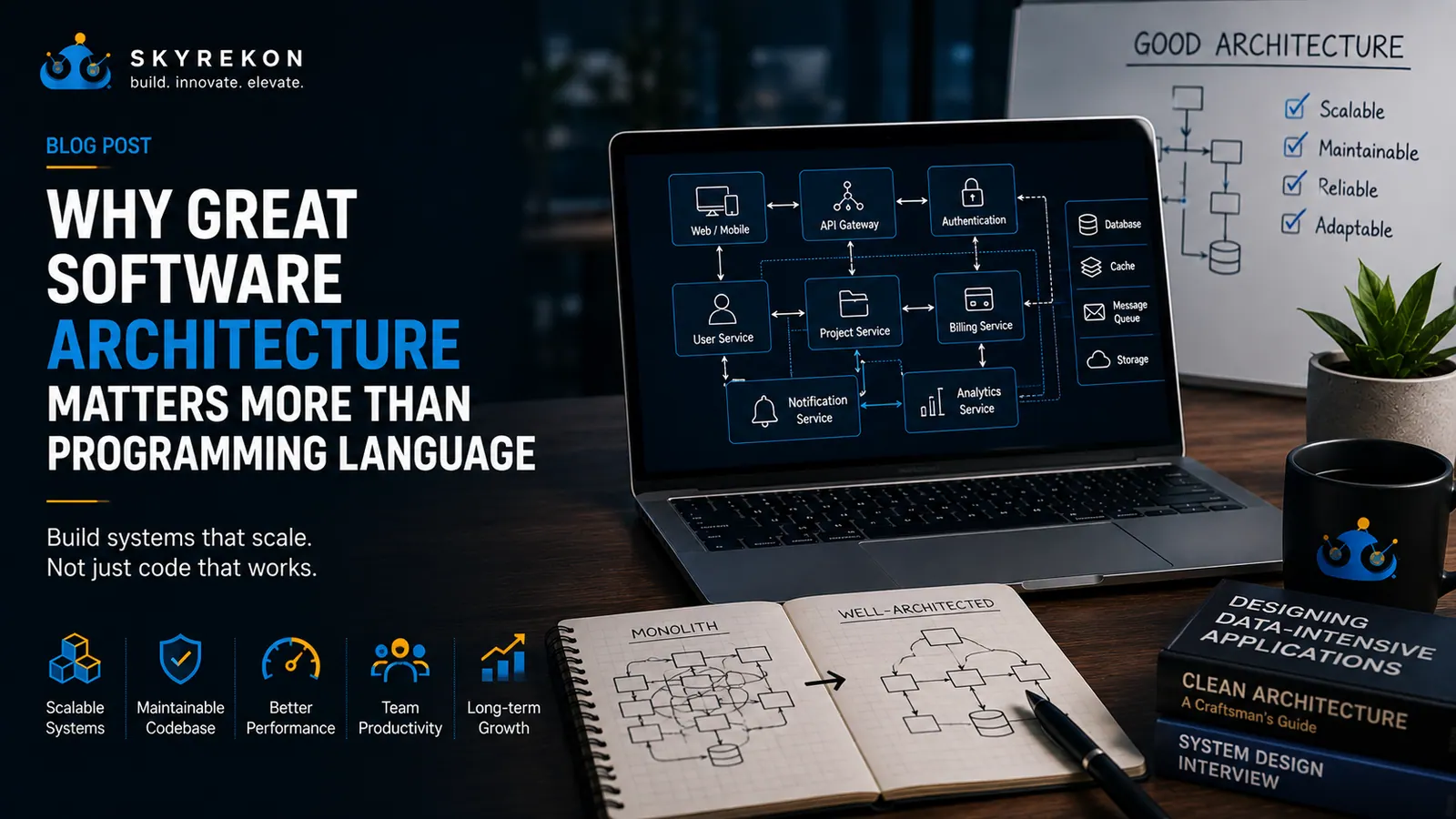
Every few months, a new programming language, framework, or JavaScript runtime becomes the hottest trend.
Teams rush to migrate.
Startups rebuild products.
Developers debate endlessly on social media.
But after building products for startups, enterprises, AI platforms, ERP systems, and SaaS products, we've learned something that rarely gets discussed:
Great software architecture will outperform the "perfect" programming language almost every time.
Languages evolve.
Frameworks change.
Architecture lasts for years.
The Wrong Question
Many founders ask:
- Should we use Go?
- Node.js?
- Rust?
- Python?
- Bun?
- Next.js?
- NestJS?
The better question is:
Can this system still be maintainable after three years of development?
That's what architecture solves.
Programming Languages Come and Go
Think about products built 15 years ago.
Many successful companies started with:
- PHP
- Ruby
- Java
- C#
- Python
Those companies still exist.
Many have completely changed their technology stack.
Yet their products continued growing.
Why?
Because their architecture allowed change.
Architecture Is About Decisions
Good architecture answers questions like:
- Where does business logic live?
- How do services communicate?
- Where is data stored?
- How are failures handled?
- Can new developers understand the codebase?
- Can new features be added safely?
None of these depend on whether you're writing TypeScript or Go.
What Makes Architecture Good?
Clear Separation of Responsibilities
Authentication shouldn't know about billing.
Billing shouldn't know about notifications.
Notifications shouldn't know about payments.
Each component should have one responsibility.
This makes systems easier to understand and maintain.
Modular Design
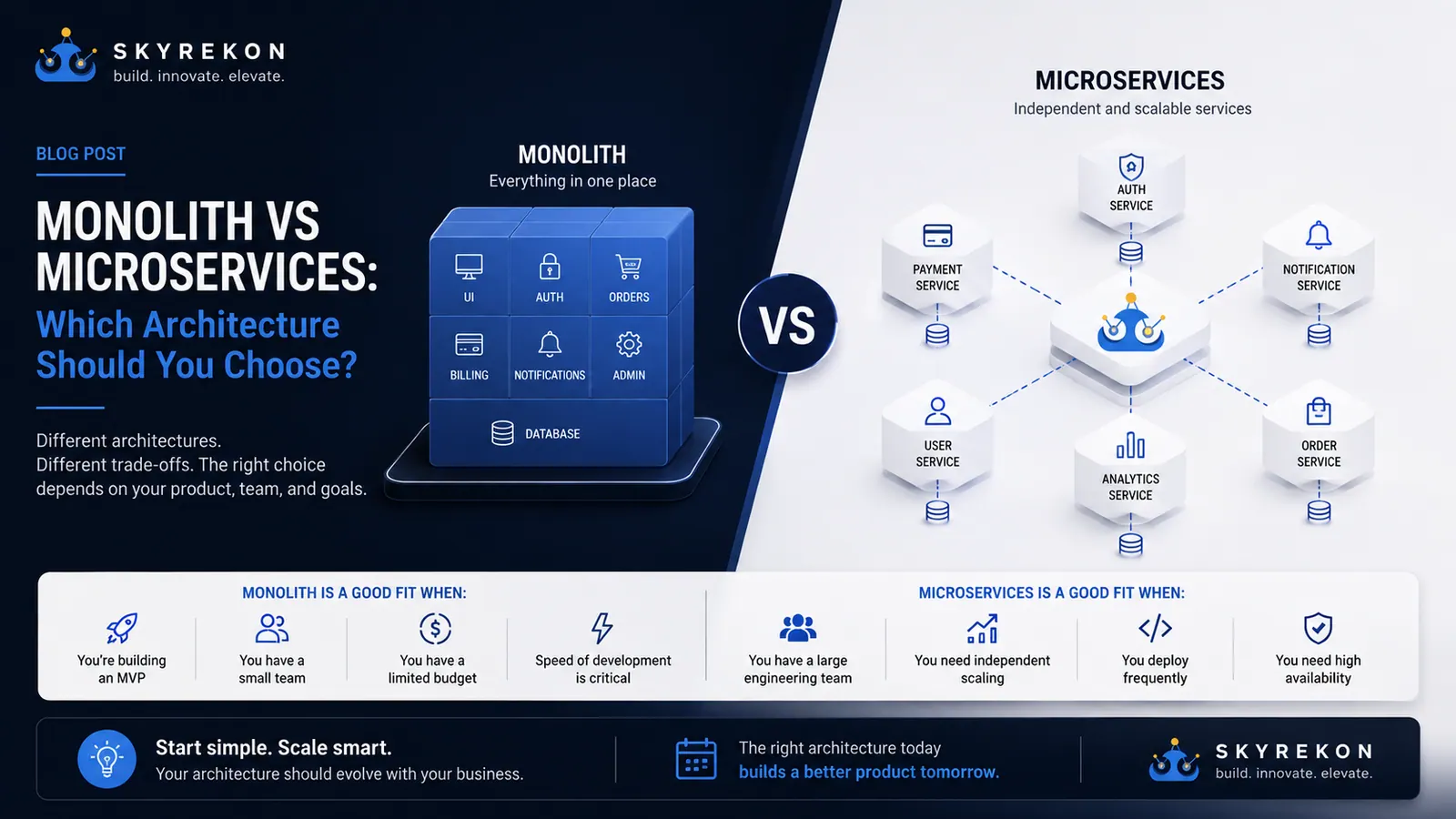
Instead of creating one enormous application, divide functionality into logical modules.
Example:
- Authentication
- Projects
- Tasks
- Payments
- Notifications
- Analytics
- Admin
Each module evolves independently.
Scalable Database Design
Changing a database later is expensive.
A well-designed schema considers:
- Relationships
- Performance
- Growth
- Indexing
- Future reporting
Many scaling issues actually begin with poor database decisions.
Clean APIs
Internal APIs should be predictable.
Consistent naming.
Versioning.
Validation.
Authentication.
Good APIs reduce development time dramatically.
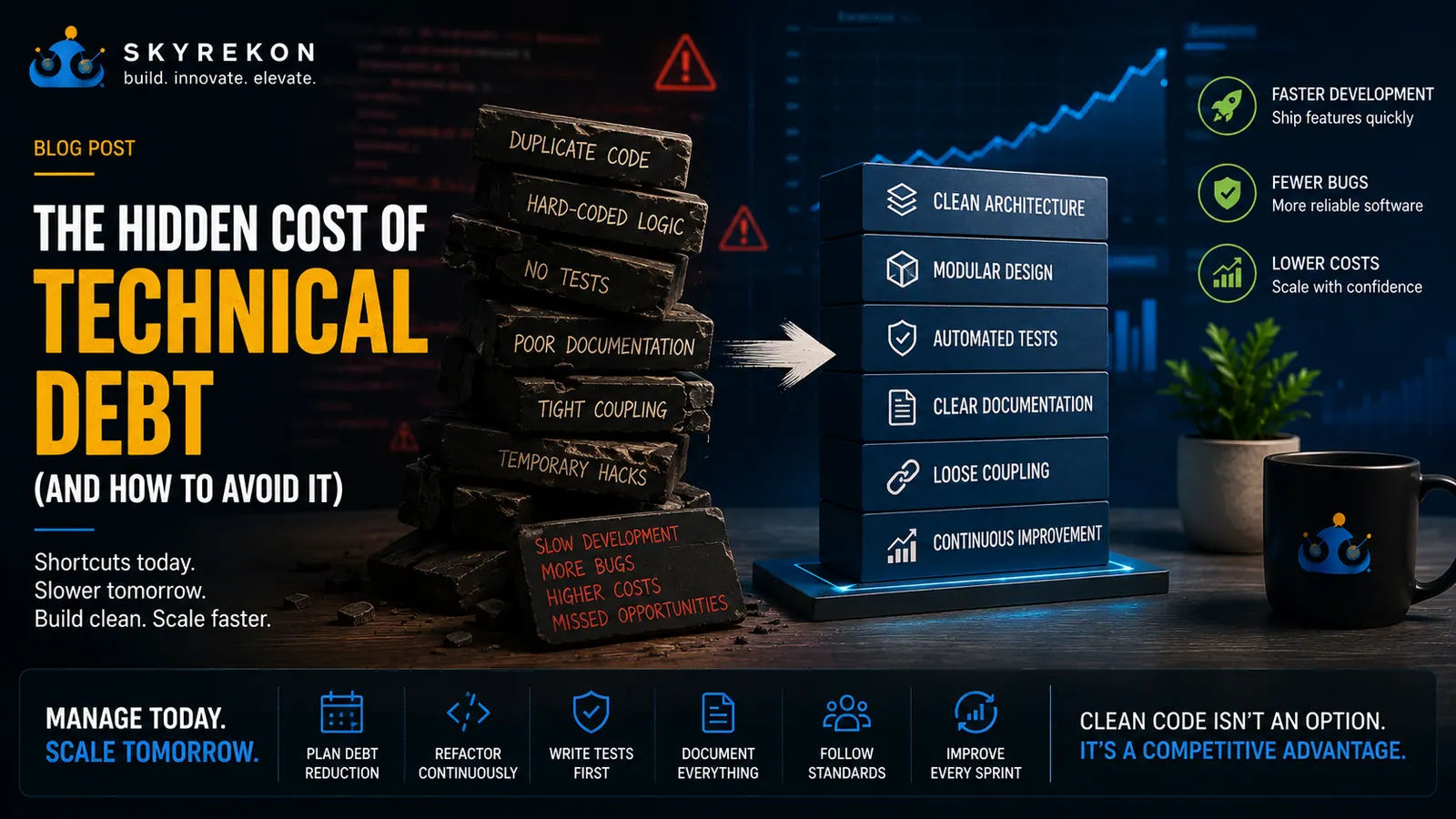
Bad Architecture Creates Technical Debt
Technical debt doesn't happen because developers write poor code.
It happens because systems weren't designed to evolve.
Symptoms include:
- Duplicate code everywhere
- Fear of deployments
- Slow feature development
- Constant production bugs
- Large files nobody wants to edit
- One change breaking multiple features
These aren't language problems.
They're architecture problems.
Think in Systems, Not Files
Junior developers often think:
"I'm writing a controller."
Experienced engineers think:
"I'm designing a system."
That mindset changes everything.
Every feature affects:
- Users
- Database
- APIs
- Security
- Performance
- Infrastructure
Architecture connects them all.
Performance Starts With Design
Many teams optimize code too early.
The biggest performance improvements usually come from:
- Better caching
- Smarter database queries
- Background jobs
- Queue systems
- CDN usage
- Efficient API design
Rarely from switching languages.
Scaling Isn't Just About Traffic
A scalable system supports:
- More users
- More developers
- More features
- More customers
- More deployments
A codebase that only one developer understands isn't scalable.
Documentation Matters
Great architecture includes documentation.
Future developers should understand:
- System overview
- Folder structure
- Service communication
- Deployment process
- Database design
- API contracts
Good documentation reduces onboarding time significantly.
Build for Change
Every product changes.
Requirements evolve.
Customers request new features.
Integrations appear.
Architecture should expect change—not resist it.
Ask yourself:
"If we doubled our features next year, would this system still make sense?"
If the answer is no, the architecture needs improvement.
Common Architecture Mistakes
Avoid these:
- Giant controller files
- Business logic inside UI
- Database queries everywhere
- Tight coupling between services
- No logging
- No monitoring
- No testing strategy
- No deployment pipeline
These issues compound over time.
Simplicity Wins
Complex architecture often looks impressive.
Simple architecture survives longer.
Start with:
- Clear folders
- Reusable services
- Consistent naming
- Proper testing
- Good documentation
Only introduce complexity when it's justified.
How Skyrekon Approaches Architecture
Every project begins with architecture before implementation.
We focus on:
- Clean system design
- Modular applications
- Scalable APIs
- Cloud-ready infrastructure
- Secure authentication
- Performance optimization
- CI/CD automation
- Long-term maintainability
Our goal isn't just to deliver working software.
It's to deliver software that can still evolve years from now.
Final Thoughts
Programming languages are tools.
Architecture is strategy.
A great architecture allows teams to:
- Ship faster
- Scale confidently
- Onboard developers quickly
- Reduce technical debt
- Deliver better products
Technology will continue changing.
Solid engineering principles won't.
Invest in architecture first.
Everything else becomes easier.
Need Help Building Scalable Software?
Whether you're launching an MVP, modernizing an enterprise platform, or designing a cloud-native application, Skyrekon helps businesses build systems that are reliable today and scalable tomorrow.
Tags
- Software Architecture
- Engineering
- Backend
- Scalability
- System Design
Building something similar?
Skyrekon partners with teams on AI-native products, platforms, and engineering systems — from discovery through production.